News
Determining compost quality using the cress germing phytotoxicity test.
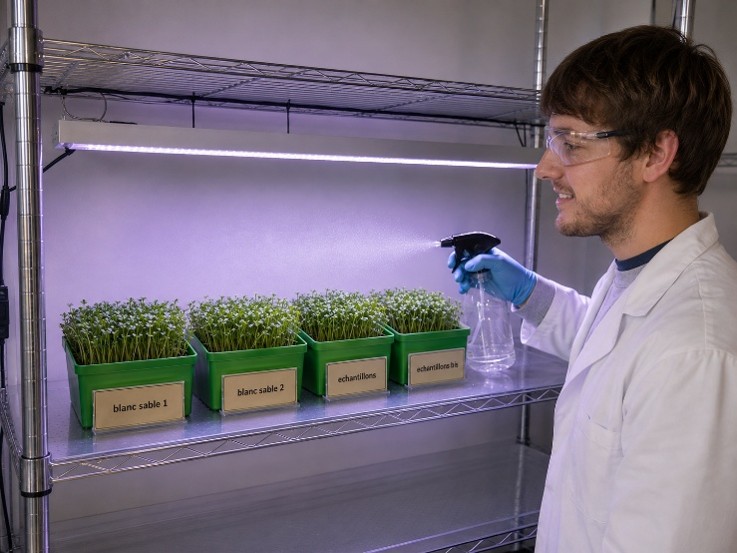
The phytotoxicity of compost is assessed using a germination test. The germination capacity of garden cress (Lepidium sativum L.) is evaluated under standardised conditions using a substrate consisting of a mixture of the fresh material to be analysed and sand.
The composition of the substrate is determined according to its conductivity (salt concentration) in order to minimise the effect of salinity. Germination capacity is compared with that obtained using a reference substrate, consisting of pure sand.
Phytotoxicity is expressed as the percentage inhibition of cress seed germination after 10 days of growth at approximately 20°C.
Problem: Compost is a highly valuable recycled fertiliser that returns organic waste to the agricultural production cycle and promotes soil fertility. To be used in agriculture, horticulture or gardening, compost must not contain substances that are harmful to plants or pathogens. If the compost is too immature, or if the decomposition or storage process has not been properly controlled, phytotoxic substances may form in the compost.
Solution: The phytotoxicity of compost can be assessed using the open and closed cress tests. While the open cress test serves as a rough indicator, the closed cress test can detect even low levels of compost toxicity, as the seeds come into contact with gases released by toxic compounds present in the compost.
Since the open cress test alone does not always indicate whether compost is healthy, it is recommended to always perform both tests.