News
Celabor welcomes two doctoral candidates from the D-CARBONIZE MSCA Doctoral Network for their secondments
Celabor is pleased to welcome two doctoral candidates from the D-CARBONIZE project (https://dcarbonizeproject.eu) , a Marie Skłodowska-Curie Actions (MSCA) Doctoral Network, for their three-month secondments at Celabor.
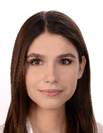
Natalia Kulbacka, from ICIQ and CNRS Rennes, will carry out her secondment from August 26 to November 25 2026, while Angelo Scopano, from the University of Groningen and ICIQ, will join Celabor from October 1 to December 31 2026.
Both doctoral candidates will be hosted within Celabor’s Materials Department, where they will benefit from Celabor’s expertise in bio-based materials and their translation towards industrial applications. Their research experience and expertise developed during the first years of their doctoral training at their respective host institutions will contribute to the development of new bio-based and sustainable material solutions for applications including agriculture, packaging and polymer processing.
Natalia Kulbacka graduated from the Warsaw University of Technology (Poland) with both Bachelor and Master of Science in Engineering in chemical technology with the specialisation of Functional Polymer, Electroactive and High Energetic Materials. Her research there focused on the synthesis of polymers with potentially antibacterial properties. She joined the D-Carbonize project in November 2023 to work at ICIQ (Tarragona, Spain) and CNRS (Rennes, France). During her PhD studies, she focus on the development of nonreductive catalytic conversion of CO2 into cyclic carbonates and cyclic carbamates to further investigate their applications and demonstrate their synthetic and polymerizable potential.
Angelo Scopano graduated from university of Padova in 2022. Then, he started his PhD in 2024 after some working experience. In his PhD, he spent two year at the engineering and technology department (ENTEG) of university of Groningen (RUG) working on the one-pot synthesis of cyclic carbonates from alkenes and CO2. Subsequently, he moved to the Institute of Chemical Research of Catalunya (ICIQ) where he stayed one year working on the synthesis of substituted cyclic carbonates using alkenes as starting material.

We are delighted to welcome Natalia and Angelo to Celabor and look forward to supporting their research and training journey!