R&D - Project
AOPTi
Completed
Photocatalytic Oxidation to Remove Micropollutants from Urban and Industrial Wastewater
Evaluation of the Advanced Photocatalytic Oxidation Process for Micropollutant Removal in Municipal and Industrial Wastewater Treatment Plants
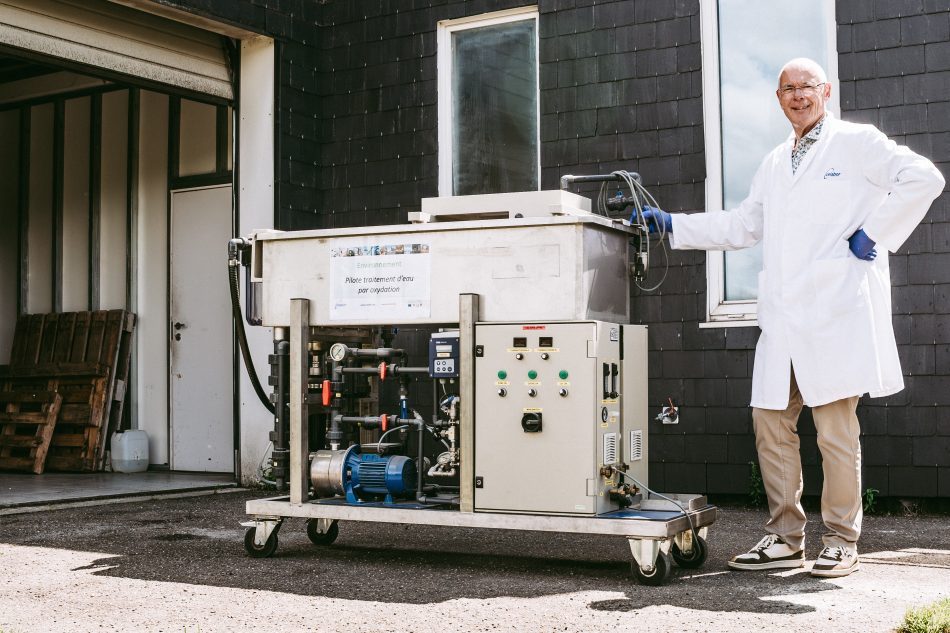
The objective of the AOPTi project is to develop and validate an innovative technology to ensure the effective removal of various types of micropollutants and toxic effects in wastewater. The relevance and behavior of transformation products in treated water will be investigated as a secondary concern. The process will be a tertiary treatment process that can be easily integrated into municipal and industrial wastewater treatment plants (WWTPs). It is an economical physicochemical treatment step after conventional biological treatment. The process is based on ozone oxidation and an additional photocatalytic treatment, followed by an adsorption step. The technology is being developed for companies involved in the water purification sector and for companies producing toxic effluents laden with micropollutants.
The AOPTi project aims to validate the removal of non-biodegradable micropollutants by advanced oxidative procedures (ozonation and photocatalysis) combined with an active biological adsorption step as a final finishing process at laboratory and demonstration scales. Process parameters must be determined according to the type of wastewater to achieve almost complete degradation of all micropollutants and to ensure the absence of toxicity in the resulting water. The treated water will be characterized in terms of chemical transformation products (TPs) and toxicity.
Learn more about the
AOPTi project
Documents